Imagine waking up to find your agency’s entire network held hostage, critical citizen data compromised, and national security at risk. Sound extreme?
Not in 2025.
Cybercrime is projected to cost businesses and governments $10.5 trillion, annually (VikingCloud), a number that will only climb as threat actors grow more sophisticated. Federal agencies, already navigating complex IT landscapes, face mounting pressure to fortify their defenses.
As we enter an era where cyber threats evolve at machine speed, Zero Trust, AI-driven security, and supply chain resilience are no longer optional—they are mission-critical.
The Cybersecurity Crisis: 4 Biggest Threats Facing Federal Agencies
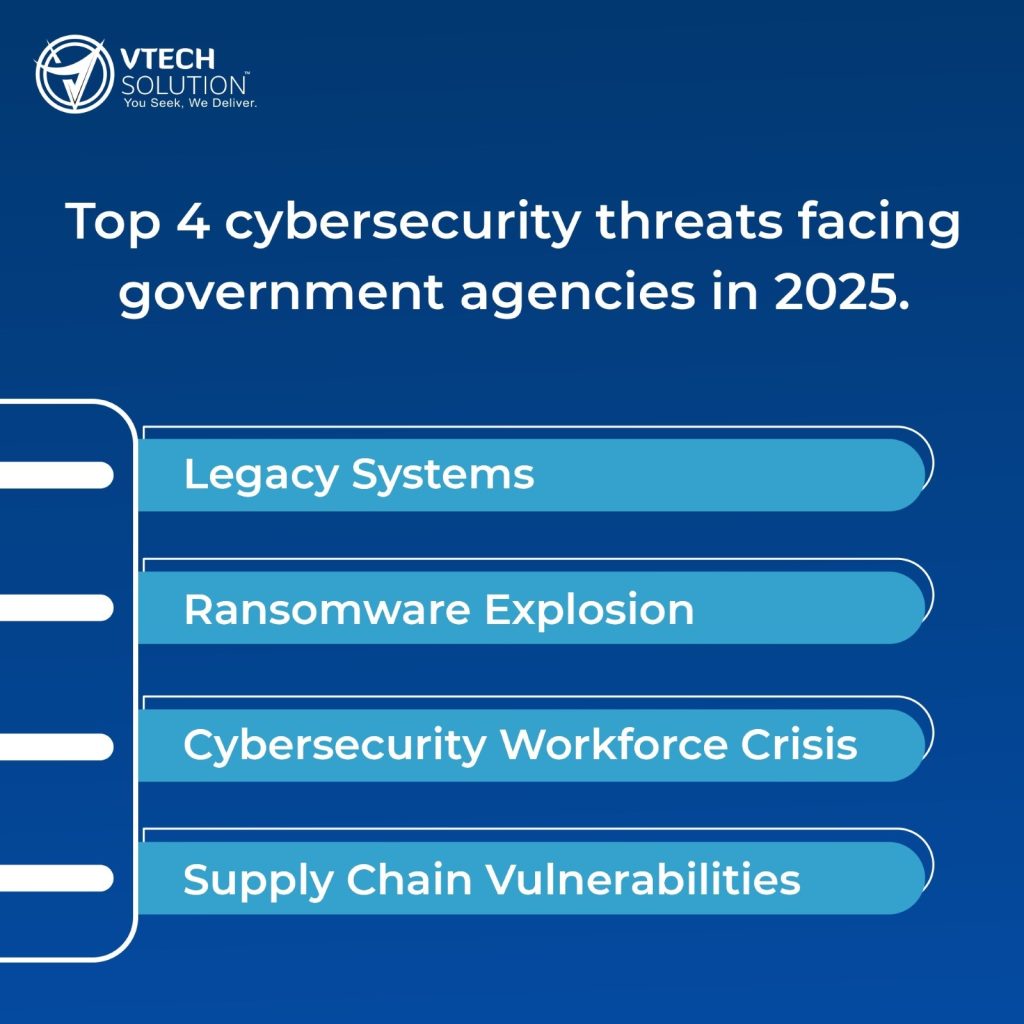
1. A Ticking Time Bomb: Legacy Systems
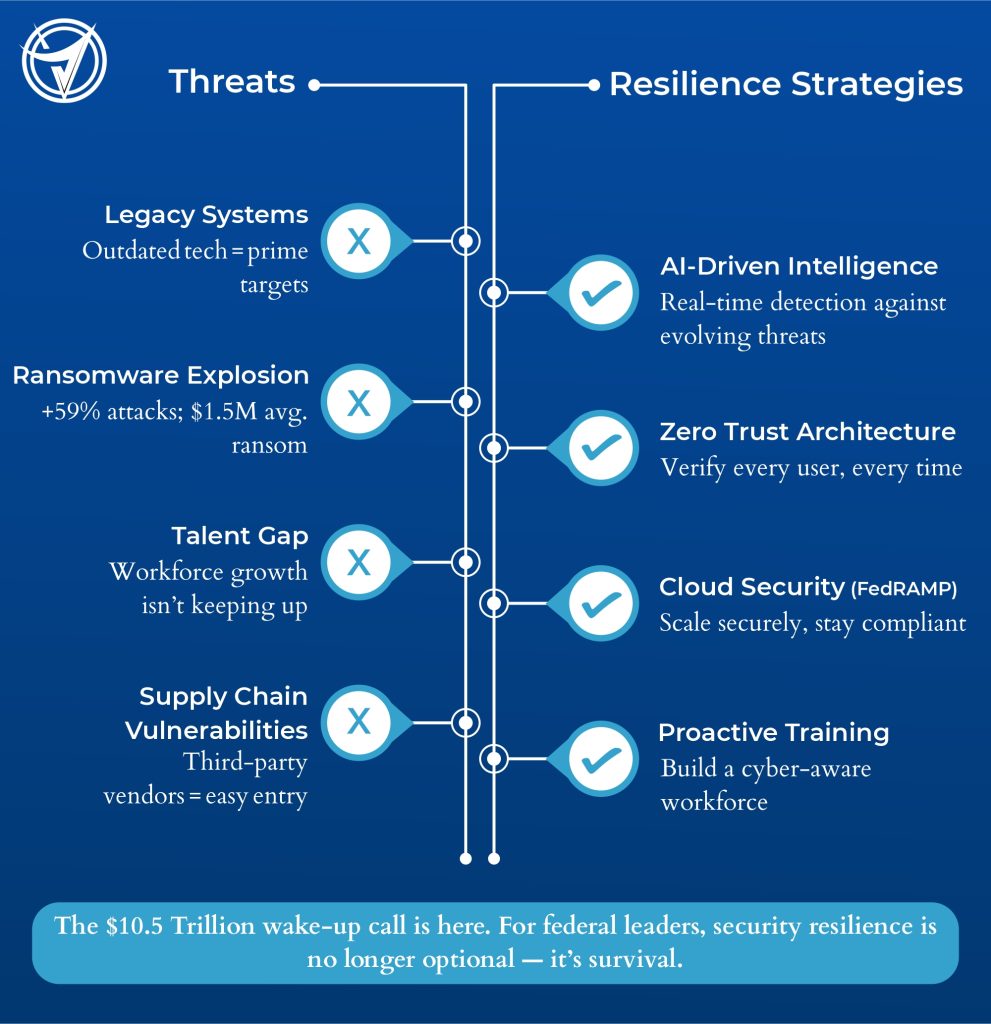
Outdated technology is quietly eroding security across government agencies. Many systems were built decades ago and lack modern security frameworks, making them an open target for cybercriminals. Each passing day without modernization amplifies the risk, turning outdated infrastructure into a national security vulnerability.
Why it’s a problem:
- Legacy systems can’t support Zero Trust security.
- Outdated software lacks patching and updates, leaving agencies exposed.
- Cybercriminals actively exploit known vulnerabilities in old systems.
Solution: AI-driven threat intelligence to detect vulnerabilities in real time and modernize IT infrastructure for a secure digital future.
2. The Ransomware Explosion
Ransomware attacks have surged 59% (Sprinto) in the past year, with federal and state agencies increasingly targeted. The average ransom demand? $1.5 million (Techradar) but the real damage comes from:
- Service disruptions cripple critical functions.
- Loss of public trust due to compromised citizen data.
- Operational paralysis, affecting national security.
What makes ransomware so dangerous?
- Attackers encrypt entire agency networks, halting operations.
- Phishing & weak credentials remain the leading causes of infiltration.
- No backups = no recovery, forcing agencies to pay the ransom or lose everything.
Solution: Implement Zero Trust Architecture (ZTA)—verifying every user, every request—to stop unauthorized access before it begins.
3. The Cybersecurity Workforce Crisis
While AI-driven cyberattacks evolve daily, the workforce protecting against them is shrinking. The federal government is short on cyber professionals, leaving agencies vulnerable to growing threats.
The reality of the talent gap:
- Cybersecurity job openings exceed available talent, leaving critical positions unfilled.
- Overworked IT teams can’t keep up with 24/7 monitoring, increasing risk.
- AI-driven threats require AI-driven defenses—but who’s training and implementing them?
Solution: Federal agencies must invest in proactive training to build a cyber-aware workforce while leveraging AI & automation to detect, mitigate, and prevent threats faster than human analysts alone.
4. Supply Chain Vulnerabilities: The Hidden Entry Point
Cybercriminals aren’t attacking agencies directly—they’re infiltrating through third-party vendors with weak security controls. Without continuous monitoring, these vulnerabilities can compromise entire networks.
How supply chains become a cyber risk:
- Agencies often fail to vet vendor security protocols.
- One weak vendor can expose an entire federal network.
- Attacks are harder to detect when they originate from trusted sources.
Solution: Strengthen supply chain security with continuous monitoring, rigorous vetting, and mandatory compliance with Zero Trust principles.
Success Story: How vTech Solution Transformed NOAA’s Cybersecurity
NOAA’s National Ocean Service (NOS) faced mounting IT challenges, including outdated identity services, security gaps, and a pressing need for cloud modernization. Partnering with vTech Solution, NOS successfully:
- Modernized IT infrastructure, enhancing operational efficiency
- Upgraded identity and access management, implementing Zero Trust principles
- Seamlessly transitioned to a secure, scalable cloud environment
- Strengthened cybersecurity resilience, ensuring continuous access to critical environmental data
This transformation allowed NOS to better support its mission while safeguarding sensitive government data against evolving threats.
What’s Next? Cyber Chaos, Probably. But Don’t Worry, We’ve Got Your Back (and Your Firewall)
The next cyberattack isn’t a question of if — it’s when. At vTech Solution, we help federal leaders build ironclad defenses with Zero Trust security, FedRAMP-compliant cloud solutions, AI-powered threat detection, and proactive risk management.
Don’t wait for disaster — fortify your agency now. Contact us or subscribe to our newsletter for the latest cybersecurity insights and trends. Lead with confidence!